Showing posts with label Louisville. Show all posts

Wednesday, December 12, 2018

Best Tips to Winterize a Vacant House


Though occupied homes can also benefit from a quick winterization, vacant houses are particularly prone to damage during extended periods of freezing temperatures. By winterizing a vacant house, you are protecting your investment, and keeping it in good condition so it can be sold, rented or otherwise inhabited at a moment’s notice without worry of unforeseen issues. If you own property in a cold climate that’s prone to long winters, here are a few suggestions that will help you in winterizing it.

Winterizing with Utilities

First of all, it is advisable to leave the heat on very low. Though it might seem like a waste of money or energy at first glance, a minimal heating bill will be less expensive than the cost of potential repairs if everything were to freeze up. There are many systems and components in a house that are meant to be kept at or near room temperature. By using your furnace or boiler at a low level, you are keeping these things secure.
Most people know that a big part of winterizing is dealing with pipes and plumbing. If you have turned off the water, hopefully that means the house was plumbed on a downgrade so you were able to drain all the pipes completely and eliminate the chance of water expanding inside them and breaking the pipes. If not, it usually is advisable to leave some water running through the pipes by turning on the fixture closest to where water enters the house and at the farthest point indoors, say in an upstairs bathroom. It needs to trickle constantly to keep water flowing.
It is also advisable to wrap insulation around the water heater, the pipes leading to and from it and insulate any pipes exposed outdoors, in a crawl space under the house, etc. If the pilot light is left on, it is not necessary to drain the water heater, but if not, then it probably should be drained and turned off. You might call a local plumbing company in your area to discuss whether you should turn the water back on or not.
It is not a bad idea to put some antifreeze in both the tank and bowl of each toilet. If the heat goes out and water inside the toilets freezes, it could crack the china fixtures.

Other Winterizing Techniques

Winterizing your plumbing and water systems might be the most important aspect of winterizing in general, but coming in pretty close is inspecting your roof and cleaning out your gutters. The roof and attic of a vacant house might be left alone for very long periods of time, so getting a roof inspection for about $500 before cold weather hits is a fantastic idea, and could end up saving you some serious money in the long run. Gutters, like plumbing, can develop real problems if ice is allowed to build up in them. Having your gutters cleaned before winter begins will reduce the risk of too much ice forming inside them.
Finally, make sure someone checks on the house every week or two, if at all possible. Though you can certainly take precautions such as winterizing whatever you can in and around the house, unexpected situations can still occur. A quick look around done periodically for as long as the house is empty (even during warmer weather) can mean the difference between a problem being caught early enough to be fixed before any damage is done, and a problem that’s left unchecked long enough to cause hundreds or even thousands of dollars in damage.

Greg Hammond  Eagle Thirteen Properties We Buy Houses Louisville

Wednesday, August 1, 2018

Why You Should Sell Your House in the Fall and How To Be Ready


The warm-weather housing market might be coming to a close, but don’t worry – there’s still a chance to find a buyer before the end of the year. In fact, you could be coming in at exactly the right time. Here are some benefits of selling your house in the fall, and why it might be a smart strategy.
Reason #1: A more serious buyer pool
Yes, the spring housing market is sure to bring out buyers, but plenty of folks may hold off on making an offer. With more homes to choose from, they can afford to be picky, and that could extend their search by months. Come September, though, serious buyers will be feeling the pressure to make their move before the holiday season or bad weather hits. That’s where you come in.
  • · How to prepare: Step up the curb appeal. Curb appeal is one of the biggest things people forget about when selling in the fall. Fix up the front porch, rake the leaves, and please – don’t forget to clean the gutters! With everything well maintained, you’ll be ready when the buyers are.
Reason #2: Less competition
Post-summer home buyers not only have the stress of the holiday season looming overhead, but their options are shrinking. Many sellers rush to close by September, so fortunately you’ll be competing in a much smaller market. That can be a powerful bargaining chip to help you close before the end of the year.
  • · How to prepare: Make your home listing stand out. Fall and winter photos run the risk of looking drab, but well-timed summer photos are bright, clean, warm – really everything you need to stand out to serious buyers. So take advantage of the season’s best days and include those photos in the listing when you go to sell in the fall.
Reason #3: Different buyer demographics
While families are more likely to make their move in the spring, millennials and empty-nesters usually swoop in a bit later in the year. They’re not the only ones, either: to avoid higher “on season” real estate rates, employers who need to relocate their workers often wait for the fall, when the market tends to cool down. These out-of-towners will probably need to get through the process quickly, too, which could mean a relatively speedy closing.
  • · How to prepare: Stage the space. Empty-nesters aren’t necessarily looking for three bedrooms, but they might want a workspace, exercise room or guest bedroom. On the other hand, a millennial couple might want space for a nursery or playroom. Let each buyer see how the house can fit their needs.
Reason #4: More flexibility for improvements
Depending on where you live, spring and summer can be a much-needed break from a harsh winter, and your house could probably use a little TLC. So give yourself those warmer months for some home improvements.
  • · How to prepare: Schedule repairs and final touches. In between weekend getaways and beach days, sneak in repairs and even small renovations if you need to. Make sure your heating system is in tip-top shape before the temperatures drop. You don’t want to show your home on the first cold day of the year, only to find the heat doesn’t work.
You may feel like you’re behind the curve, but in many ways, now’s a great time to sell. All it takes is a little bit of prep work, some smart planning and the right tools to get ahead.

Greg Hammond  Eagle Thirteen Properties, LLC

Monday, June 25, 2018

Is House Flipping finally on the Decline?

House flipping hits decade high, but returns are shrinking

  • More and more people are flipping houses, but they are reaping smaller rewards.
  • Just more than 207,000 homes were flipped in 2017, the highest in a decade.
  • The number of people or companies flipping homes also hit a decade high.


More and more people are flipping houses — the most in 10 years – but they are reaping smaller rewards. High home prices, hot competition and very, very few available homes to buy are combining to make this popular trade ever more risky.
Just more than 207,000 homes were flipped in 2017, according to a new report from Attom Data Solutions, which defines a flip as a property bought and sold in the same 12-month period. That is the highest number of flips in a decade. The number of people or companies flipping homes, 138,410, also jumped to a decade high.
Today's flippers, however, are nothing like those of a decade ago, who used cheap and easy money to finance their trades.
Taylor Denchfield has been flipping homes since he was 17.
Source: Taylor Denchfield
Taylor Denchfield has been flipping homes since he was 17.
"The surge in home flipping in the last three years is built on a more fundamentally sound foundation than the flipping frenzy that we witnessed a little more than a decade ago," said Daren Blomquist, senior vice president at Attom Data Solutions. "While financing for flippers has become more readily available in recent years, 65 percent of flippers still used cash to buy homes flipped in 2017, nearly the reverse of 2004 to 2006, when 63 percent of flippers were leveraging financing to buy."
Today's flippers are seeing bigger gross flipping returns in dollar figures because they're dealing with much higher home prices and margins, but they are also putting more money into the projects, making the net return lower. The average gross flipping return on investment last year was 49.8 percent, down from 51.9 percent in 2016.
Taylor Denchfield has been flipping homes in Maryland since he was 17. At 25, he's a veteran with a strict strategy for profit. His net returns are about 30 percent per project.
"I'm a real estate agent so I'm able to both buy and sell the deals myself saving on the listing commission. I'm a builder, so I do have all the contractors and staff in-house to complete everything from start to finish. And I do have contacts to source off-market deals. Three of those things combined is really what permits me to be more profitable than some others," he said.
Denchfield purchased a small home in Silver Spring, Maryland, a suburb of Washington, last September. He put about $80,000 worth of work into it, and the bet paid off. He sold the property in two weeks and expects to make a net profit of about $100,000.
"You have to be able to get in for a low enough price, it has to be a hot enough neighborhood and you have to know exactly what the build is going to entail," he said.
Denchfield does use leverage for some of his deals, and private lending for house flipping is now a growing trade. While Fannie Mae will back as many as 10 investor loans per flipper, it is still very strict with underwriting, so flippers are increasingly going to private lenders.
"There is more capital available now," said Bobby Montagne, CEO of Walnut Street Finance, a Virginia-based private lender specializing in investor loans. "People are seeing others making profits in this space, so more people are going to join the party."
Above: A new deck added to a flipped house.
Interest rates on these loans, however, are significantly higher than the average rate for regular owner-occupant buyers. Investors can expect to pay 10 to 12 percent rates to private lenders, compared with the average 30-year fixed rate of 4.6 percent for conventional home loans.
"So that's just another thing that really tightens up the margins," said Denchfield.
The popularity of house flipping has been fueled by popular TV shows that make the process look both dramatic and fruitful at the same time. Denchfield warns that is the exception, not the rule.
Today's housing market is increasingly expensive, and there are historically few distressed homes for sale, unlike during the foreclosure crisis at the start of this decade. Seasoned flippers who can find properties that haven't been listed yet will fare better. Some go through wholesalers, others through real estate agent contacts.
There is also a supply crisis, especially on the lower end of the market where flippers usually make their best returns. There are more million-dollar homes available, but the risks there are even higher, given the high investment price.
Flipping returns vary by city. The highest average gross returns last year were Scranton, Pennsylvania (168.2 percent); Pittsburgh (145.5 percent); Baton Rouge, Louisiana (122.9 percent); and Philadelphia (115.7 percent). Cleveland, Baltimore and Buffalo, New York, were also above average.
Flipping rates were highest in Memphis, Tennessee; Las Vegas; Tampa, Florida; Birmingham, Alabama; and Phoenix.


Tuesday, March 6, 2018

Top benefits of selling your house to a home flipping company


Top benefits of selling your house to a home flipping company
  1. It’s fast and easy
This has to be the most notable benefit of selling your home to a home flipping company. Selling a home is usually a time-consuming process especially when you are relying on traditional methods i.e. putting up a ’For Sale’’ sign on your yard or interviewing and hiring a real estate agent. The process is usually difficult when you want to sell your home at the best price possible. House flipping companies take away the difficult and time-consuming process of putting up a house for sale and waiting for potential buyers. 
When you use a house flipping company/investor, you don’t have to prepare your home for sale i.e. renovate, landscape, etc or market. The companies buy the house as it is and the sale is completed in record time. As long as there are no title issues, these companies typically take 7-10 days to complete the transaction. If you are in dire need of cash, a house flipping company is your best bet. It’s simply about deciding if you want to go ahead with the sale or not after getting an offer, and most house flipping companies pay in cash.
  1. You are guaranteed of selling your house regardless of the state or condition
House flipping companies or investors who buy old and/or ugly houses don’t really care about the state or condition of your home. These companies specialize in buying such homes, so you are almost assured of selling your home when you choose such companies as opposed to selling your home conventionally. If your home has deteriorated over time, but you want to sell fast without having to do any renovations/repairs, house flipping companies are your best option. 
House flipping companies are in the business of buying old/dilapidated/ugly homes. The companies renovate such homes and resell them at a profit. The companies also target lots where homes sit on in cases where it doesn’t make financial sense to renovate. The Arlington and Vienna areas of Northern Virginia have become hubs for real estate investors mainly interested in purchasing homes for their lots. While typical home buyers look for perfect homes to buy, home flipping companies are looking for old, ugly and/or dilapidated homes to buy. In fact, most house flippers will say the uglier, the better. You are therefore assured of a sale even if you won’t get the best deal.
  1. You avoid hiring a real estate agent
The process of finding the right real estate agent to sell your home can be a difficult and time consuming process. It might take talking to and interviewing numerous agents before you find a real estate agent that you are comfortable with.
  1. You avoid ”for sale by owner.”
Trying to sell your home on your own is usually a daunting task. Although some homeowners prefer this option to save on real estate commissions, it takes a lot of effort, time and skill to sell your own home. For instance, you need to have good marketing skills to market your home online and offline. Putting up a ”For Sale” sign isn’t enough to draw potential buyers. You need to take perfect photographs of your home and post them in real estate listings online relevant to your area. You also need to avail yourself for showings, negotiate effectively with potential buyers, represent yourself during critical stages of the entire process i.e. buyer’s home inspections, etc.

In a nutshell, you need a variety of skills to sell your own home without the help of a real estate agent. In most cases, it isn’t worth the effort trying to sell your own home without any help especially if your home is old or in poor condition. When you sell your ugly home to a ‘we buy ugly houses’ flipping company or investor, you avoid all the stresses and requirements associated with selling a home without help from an agent.

      Just like anything else you need to do your homework before selling your house. There are good and bad "We Buy Houses" companies out there just like any other business. Here at Eagle Thirteen Properties we are in it to make a small profit but not by hurting anyone in the process.  If we can't make you happy, we simply will not do the deal. We are a family owned and operated business who prides ourselves into helping homeowners out of difficult situations. If you need help selling your home, give us a call. it's a free opportunity to review all your options and absolutely NO PRESSURE. Thanks and have a Blessed day!

Greg Hammond President of Eagle Thirteen Properties LLC

Friday, March 2, 2018

Housing Market Forecast for 2018


Real Estate and Housing Forecast 2018 to 2020

Mar 1, 2018.  Buying or Selling a house or condo in 2018 or 2019? How do you feel right now about the 2018 housing market? Is the recent pessimism justified?
Save
Millennials still hopeful to buy a home in 2018
Take another look at prices, GDP, wages, jobs, and other key data below on the US Economy for the next 6 years and you may see a surprisingly positive picture, far from the dread of the recent stock market correction.
This completely updated EPIC United States Housing Report has market updates and predictions for 2018 to 2020, and other data to 2026.

IN this post, you’ll discover the hottest city markets, zip codes, get economic, employment, finance, and housing projections to understand the key fundamentals driving rental investment, home construction and the real estate markets in 2018/2019 to 2026.
What’s the story for winter 2018? It has to be Texas and Michigan, however the overall picture is of a very good spring for the housing market nationwide and going forward to 2026. Population growth in San Francisco, Denver, Houston, Seattle, and Phoenix. The western migration is strong, as will those housing markets will be.


Save
Las Vegas leading the way with 8.7% economic growth, 6.9% price growth and 4.9 sales growth. Infographic Courtesy of Realtor.com

The Complete Picture for 2018

Ready to choose your realtor and buy a house or condo this year? The outlook is really rosy! And how about investing in a rental income property for sustained passive income? This current lull might make the next 3 months the best time to buy. The outlook is as positive as could be for buyers. Lock in your mortgage rate.

Overall, predictions and outlook for the US housing market are positive. That’s because the US economy is on its strongest roll ever, bolstered by lower taxes, improved trading agreements, growing American confidence, happiness, comfort, freedom and the American dream has been kindled again.
Take a look at more detailed reports of major US city markets: Latest Posts:  San Francisco Housing Market | | Boston Real Estate Market 2018 | Florida Housing Forecast 2018 | Miami Housing Market |  Los Angeles Real Estate Forecast | New York Real Estate Predictions | Houston Market Forecast  | Houston Real Estate Forecast | Seattle Housing Forecast
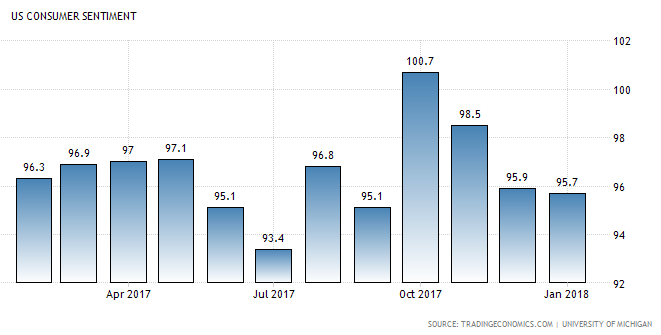
This graphic courtesy of Trading Economics shows the top sign that the real estate market will be healthy for some time, and that buying a home is a wise investment (Trading economics is a very informative site, have a visit afterward).
Save
Increased government spending, low but slowly rising interest rates, and the repatriation of business and corporate funds back to the US means it’s a healthy, safe market for everyone.
Foreign investment has been strong because the world knows, the US is the place to be. American’s have always had a great attitude toward risk and business growth. Now the economy and business markets are allowing that spirit an opportunity to pay off.

NAR/Realtor Outlook on the Housing Market

Housing Indicator Realtor.com® 2018 Forecast
Home price appreciation 3.2% increase
Mortgage rate Average 4.6% mortage rates in 2018 to 5.0% (30 year fixed) by year end
Existing home sales 2.5% growth, low inventory problem easing
Housing starts 3% growth in home building 7% growth in houses
New home sales Growth of 7%
Home ownership rate Stabilizing at 63.9% nationally
Despite the market correction, experts feel this bull market could continue as long as business keeps coming back to the US. That’s a long process of repatriation. In the meantime, the jobs picture, wage growth, investment, and profit growth are giving real estate participants a lot of optimism.
The resistance to housing development is slowing. Conservatives are giving up amidst intense pressure by those facing outrageous housing shortages and skyrocketing rental prices.

Housing Shortages Won’t Ease

Although January’s sales were disappointing, it’s due to the severe shortage of housing. Demand is there and you’ll be competing against a hoard of buyers in 2018.  Corelogic expects 2018’s home prices will grow 4.3% by next December.  NAR and Realtors® expect only a 3% growth in prices this year. Nevada, Texas, Washington, and Florida are the states with the best outlook, and perhaps the best places to buy homes or rental properties.
The Bay Area, Portland, and Seattle areas saw the highest growth in prices last year while LA’s tumbled. Listings fell dramatically in cental California, Oregon, Washington, and New York.
Consumer mood was not so good in July of last year, mostly due to government problems. Yet the market came flying back. These challenges overcome mean more Americans will have more confidence in their personal situation.

The US Economy 2018/2019

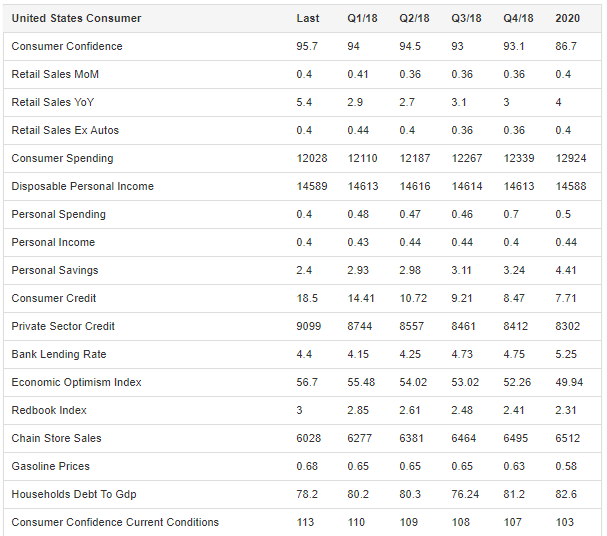
These stats from Trading Economics show positive fundamentals that will drive growth in the housing market, and in turn will bolster the economy, since new household consumer spending and housing investment is a key driver of the economy.
The tax cuts should help although the Fed is counteracting that growth with a questionable raising of interest rates which seems to have sparked the sudden stock market volatility.  Although some disincentives are present for home buying in certain price ranges, that will help keep the market balanced for 2018.
Home prices should begin rising again this late spring in Florida, New York , Boston, San Diego, Houston, Miami, Seattle, Bay Area and the rest of  overheated California.
Buyers and sellers will enjoy the market trends, stats, threats, and the key factors including housing construction starts described below. Enjoy the big picture!

We Buy Houses Louisville/ Eagle Thirteen Properties

Wednesday, January 24, 2018

The Pros and Cons of Selling Your Home to the "We Buy Houses"/ Real Estate Investor Guys


If you have a home listed for sale, chances are you’ve either noticed the abundance of roadside signs that read, “We Buy Homes Fast!” or perhaps you’ve even received an offer to purchase your home from a real estate investor   The real estate market has changed dramatically over the last decade and it’s becoming more and more common for a typical home seller to encounter investors.  But if you’re like most home sellers, this may be your first experience dealing with investors.  So, what are the pros and cons of selling to an investor?
Pros of Selling to Real Estate Investors
  • Flexible Payment Options – Investors may offer various payment methods such as certified funds, cash, pre-scheduled cash payments, or perhaps they may even take over the existing mortgage completely.  With multiple options available, sellers may find a solution that suits their needs.
  • Cash Offers – Quite often investors are willing to pay cash for a home and with the recent tightening of financial restrictions, coupled with the growing number of complaints about low appraisals, having a cash buyer has become even more appealing.
  • Selling “As Is” – Typically, investors offer to purchase a property “as is,” many times sight unseen.  As a seller, that allows you to avoid any costly repairs that would normally be considered your financial responsibility. If you list with an agent more than likely they are going to give you a list of repairs before the house can be sold. If you sell to an investor, you sign and walk away if you like.
  • Fast Closings – There are investors who can close within 7 days.  How is that possible? Because the sale of the property is not reliant on approved financing, appraised values, home inspections, or the like; bypassing all of these steps expedites the process considerably. Here's another way to look at it. Dealing with investors is like selling your used car.  You can either list your car in the paper, Craigslist, or sell it yourself and deal with all that entails or you can sell it to the dealer for less and have cash in hand the same day.
Cons When Selling to Real Estate Investors
  • Investors Do Not Need a License to Buy – This means as the seller, you know nothing about the person/entity offering to buy your home.  Some investors are corporations, but some are individuals who just happen to also be real estate agents.  This is cause for concern for many sellers because they question the motive behind the purchase; do they want to buy my home to resell it for more?
  • There are Plenty of Scam Artists Posing as Investors – There’s a risk of fraud in any financial transaction, but it’s especially critical to avoid scams when dealing with your largest asset.  To avoid any issues, get the name of the investor and do research online to see who they are, ask for references, look them up with the Better Business Bureau, and ask your listing agent to do some research on your behalf.
  • Homeowners Will Likely Sell Below Market Value – Investors have their own costs to contend with and you can be assured that those costs will be factored into their offered price.  Investors are also aware of the power behind their cash offer and the fact that they are taking a risk by purchasing “as is.”  They may be relying on your motivation to get out quickly.   Whatever the reason, it is unlikely that an investor will pay market value for a home in its peak condition.

Greg Hammond Eagle Thirteen Properties Louisville, Ky

Thursday, May 25, 2017

My top 5 tips for investing in real estate


If you’re just beginning to invest in real estate, you’ll find that there’s a lot to learn. Real estate investing is more complicated than investing in stocks because of the financial, legal, and extensive due diligence requirements involved. That’s why it’s a good idea to give yourself a solid education before you purchase your first investment property.
However, before you get your advanced degree, it’s a good idea to familiarize yourself with the fundamentals. To that end, here are 5 basic tips for investing in real estate.
1. Location Matters
The old adage that “location matters” is most accurate when it comes to real estate investing. Before you fork over a down payment and put yourself in a significant amount of debt over a property, ensure that it’s in a good location.
Look for the worst house on the best street. That’s a principle you’ll come across quite a bit as you delve into further real estate investing advice.
You want to invest in the worst house on the best street because it gives you an opportunity to build equity. It’s a property in a great neighborhood (“the best street”) that needs some work (“the worst house”). You can invest some money to fix it up and sell it to someone else who wants a ready-to-move-in house in a fabulous location. Professional real estate investors call this “fixing and flipping.”
2. Look for Wholesale Properties
Investing in real estate is just like investing in the stock market in at least one way: you’re looking for the best deal. If you’re a savvy stock market investor, you probably won’t buy too many stocks at their high if you plan on holding them for a long time. Instead, you’ll follow the Warren Buffet principle of getting greedy when everyone else gets fearful. You’ll buy stocks that are beaten down and make a fortune when they turn around.
That’s what you want to do when it comes to real estate investing. Avoid paying “full price” for properties. Instead, look for so-called wholesale properties that are offered at a steep discount. Sure, they’ll probably need some work. Run the numbers and see if the investment in rehab is worth the ultimate selling price.
As noted at ThinkConveyance: “You can easily invest $20,000 in a property and add twice that much to the selling price. That’s why real estate investing is so attractive to investors who want to maximize their return on investment.”
3. Understand the Tax Benefits
The people who run our government want private investors to provide housing for people. That’s because they know that if private investors don’t provide housing, then the government will be responsible for it.
To that end, Uncle Sam offers significant tax benefits to real estate investors. The most significant benefit, arguably, is the depreciation write-off. When you buy an investment property that includes a building, you get to write off the depreciation of that building as a tax deduction. You’ll have to consult your tax advisor for specifics, but basically you can expect to depreciate a residential building over 27 years and a commercial building over 39 and a half years.
Keep in mind that the IRS views your real estate investment efforts as a business so you also get to claim the “necessary and ordinary“ deductions that business owners take, including mortgage interest, insurance, and maintenance expenses. Again, it’s a good idea to consult your tax advisor about specifics.
4. Check Your Credit Report
You’re more than likely going to need to borrow money to buy real estate. That’s why you should check your credit report before you begin investing in real estate.
If you have problems on your credit report that are mistakes, get those resolved as quickly as possible. If you have problems that are legitimate, then you’ll need to work to improve your credit.
Simply put, banks aren’t going to loan money to you for a property that’s not your primary residence as readily as they’ll loan it to you for your own home. That’s why your credit has to be spectacular.
5. Use the “1% Rule”
If you’re planning on buying a property that you’ll rent out one or more tenants, use the “1% Rule” when you decide whether or not the property is worth the price you’ll pay for it.
The 1% Rule simply states that an income producing property must produce 1% of the price you pay for it every month. For example, if you’re looking at buying a property for $150,000, then the monthly rental income should be 150,000 x 1% = $1,500.
Wrapping It Up
Real estate investing offers the potential for fabulous returns. However, people have also bankrupted themselves investing in real estate. Be sure that you know what’s involved before you start.

We Buy Houses Louisville/ Eagle Thirteen Properties

Thursday, May 4, 2017

7 Lucky Reasons to Go to Thurby

7 Lucky Reasons to Go to Thurby

Thurby is the new Oaks.
Locals say it’s what Oaks used to be, before the world caught on that the Friday before Derby was one of the greatest days to go to the track. After this discovery, what was once “Louisville’s Day at the Track” became awash with outsiders. Out-of-towners, with their tour buses and overpriced tickets, stampeded our track and took over our holiday on Friday.
No worries–we just moved our party back a day, to the Thursday before Derby, now affectionately known as “Thurby.” Louisvillians have made this day their own, with lighter crowds and a perfectly primed Churchill Downs ready for the taking.
The Paddock is perfection at Thurby. You can actually walk through the area and see a horse.
If you have not had the pleasure of attending a Thurby, might we offer you seven solid reasons why you should go? In no particular order, they include:

1. It’s Louisville’s day at the track.

Remember when you’d go to Oaks, and you’d see every single person you knew, plus their families and even their grandparents? Everyone had a section that they gravitated toward, where they had lifelong seats. Remember when you knew that if you wanted to see your friends from college, you would go to this section? See your friends from high school, go to this section and on and on. That’s what Thurby is now shaping up to be.
Back to the old neighborhood seats, where everybody knew your name

2. It has all the trappings of Derby with no fuss.

You would think you were going to Derby when you go to Thurby. Everyone is in their best finery, wearing dresses, suits, hats and fascinators. Mint juleps and lilies are flowing. Horses are all there. But here’s the twist: THERE ARE NO LINES. There is no crushing mass of humanity. Best of all, everything is immaculate. It feels like being first in line to go to Disney World.
Concessions are ready and waiting for you, with no sign of a crowd.

3. You get a lot of bang for your buck.

General admission to the Paddock is $15. Third-floor clubhouse box seats are only $30. And it’s really only $30. It’s not like when they list the Derby tickets at $100 and you really end up paying $1,000 a ticket. Plus, you feel like you’re having a private tour of Churchill Downs before the Derby. With no crowds and the track in prime condition, you get to experience all of the wonderful amenities without all the crowds and craziness.
You cannot get this close to a horse, much less SEE a horse, on Oaks and Derby days.

4. The cocktails, entertainment and food are all top-notch.

There’s a band! There are premade drinks and punches! There’s awesome food at the concession stand! And you’re not standing in line for an hour to get a $9 beer in a can.
Huge vats of margaritas and Bloody Marys all made with top-shelf Brown-Forman products

5. It’s a test run for Oaks or Derby (or both!).

Want to see if that fascinator is going to give you a headache? Can your shoes make it all day? Is your dress too short? Consider Thurby a test run for so many operational issues. It’s like having all the prep work done for Derby, so that the little things, like a raging blister or a wonky hat don’t ruin your day.
Guess what? You’ll miss my favorite people outside the track on Thurby. They don’t get there until Friday.

6. It is a great girls’ day or boys’ day out.

Thurby is a great excuse for a girls’ day out or even a boys’ day. We’ve even celebrated birthdays at Thurby. If you need a reason to get a bunch of friends together, this is a good one.
Girls’ day out!

7. It doesn’t have to be a marathon.

Because it’s on a regular workday (well, not really here in Louisville), you can go at lunchtime, stay for a few hours and be home for dinner. It’s a little like a secret rendezvous. Because the tickets are so cheap and nothing is a hassle, you can just do a drop in and not commit to an entire day of marathon tracking.